"When most marijuana activists, growers and consumers first heard about an initiative that would legalize cannabis in California, they thought it was a pipe dream come true. To many, legalization implied that it would no longer be a crime to possess, consume or distribute marijuana. Cannabis consumers rejoiced at the idea of being able to buy from their neighbors or at parties—just as they already do—with no legal retribution. Small-time growers envisioned being free to sell their product to those who sought them out, with no legal repercussions. Marijuana activists thought it meant that people would stop getting arrested for pot, and that the drug war would finally be over. But now that the initiative is headed to ballot, many pro-legalization supporters are coming out against it. Why?
Simply put, the Regulate, Control and Tax Cannabis Initiative does not reflect most people’s ideas of what legalization would be. The media often incorrectly reports that this initiative calls for 'full legalization' of marijuana. It does not. In fact, it reverses many of the freedoms marijuana consumers currently enjoy, pushes growers out of the commercial market, paves the way for the corporatization of cannabis, and creates new prohibitions where there are none now. Apparently, to be pro-legalization and pro-prop 19 are two different things entirely...
I asked Richard Lee, principle investor in this initiative, directly about this in an interview:
"Let's say I get pulled over by a cop and I'm carrying an ounce. How will I be able to prove that it was 'lawfully obtained?'" I asked.
Lee's response: "You'll have to keep your receipt."
Not only is this inconvenient, but it sets the industry up to be monopolized. This prohibition also means that even if you are in possession of marijuana that was gifted to you - if it was purchased from anywhere other than a licensed dispensary, you will be illegally in possession of "unlawfully obtained" cannabis, and you will be subject to punishment under Prop. 19.
This is what "legalization" looks like?
And there are very few licensed dispensaries in California, by the way. In Oakland, there are four—-Richard Lee owns one of them—-and a cap has been placed in that city so that there can be no others. (Cha-ching!)"
Source
Showing posts with label law. Show all posts
Monday, October 11, 2010
Stoners Against Proposition 19
Rebranding Marijuana: How weed could save the economy, end Mexican drug wars, and heal the world
Mexico:
"We have believed for some time that Mexico should legalize marijuana and perhaps other drugs. But until now, most discussion of this possibility has foundered because our country's drug problem and the U.S. drug problem are so inextricably linked: What our country produces, Americans consume. As a result, the debate over legalization has inevitably gotten hung up over whether Mexico should wait until the United States is willing and able to do the same.
Proposition 19 changes this calculation. For Mexico, California is almost the whole enchilada: Our overall trade with the largest state of the union is huge, an immense number of Californians are of Mexican origin, and an enormous proportion of American visitors to Mexico come from California. Passage of Prop 19 would therefore flip the terms of the debate about drug policy: If California legalizes marijuana, will it be viable for our country to continue hunting down drug lords in Tijuana? Will Wild West-style shootouts to stop Mexican cannabis from crossing the border make any sense when, just over that border, the local 7-Eleven sells pot?"
Héctor Aguilar Camín and Jorge G. Castañeda, The Washington Post
The Economy:
While California struggles to address the state's swelling budget deficit, the legalization of marijuana looms as an attractive way of raising revenue for the state.
The benefits of legalization include:
* An excise tax of $50 per ounce of marijuana would raise about $770 - 900 million per year.
* Retail sales on the legal market would range from $3 - $4.5 billion, generating
another $240 - 360 million in sales taxes.
* Legalization would save over $200 million in law enforcement costs for arrest, prosecution, trial and imprisonment of marijuana offenders. Need for CAMP helicopter surveillance would also be eliminated.
* Based on experience with the cigarette tax, total revenues of $1.5 - $2.5 billion might ultiimately be realized.
* Industrial hemp could also become a major business, comparable to the $3.4 billion cotton industry in California.
Source
The World:
“Hemps prohibition has led to untold suffering around the globe. If we— the global human population — had been able to grow the miracle plant hemp (Cannabis genus) locally and to use it for local industries and businesses, including and especially for fuel, we would never have needed to be addicted to oil...
“None of this oil-related...degradation of the environment would have occurred if hemp had not been prohibited but had been used wisely and intelligently as a major foundation of human society. Indeed, hemp-based economies could still save the human world, while hemp planting could go a massively long way in rescuing the natural world as well.”
Source
"We have believed for some time that Mexico should legalize marijuana and perhaps other drugs. But until now, most discussion of this possibility has foundered because our country's drug problem and the U.S. drug problem are so inextricably linked: What our country produces, Americans consume. As a result, the debate over legalization has inevitably gotten hung up over whether Mexico should wait until the United States is willing and able to do the same.
Proposition 19 changes this calculation. For Mexico, California is almost the whole enchilada: Our overall trade with the largest state of the union is huge, an immense number of Californians are of Mexican origin, and an enormous proportion of American visitors to Mexico come from California. Passage of Prop 19 would therefore flip the terms of the debate about drug policy: If California legalizes marijuana, will it be viable for our country to continue hunting down drug lords in Tijuana? Will Wild West-style shootouts to stop Mexican cannabis from crossing the border make any sense when, just over that border, the local 7-Eleven sells pot?"
Héctor Aguilar Camín and Jorge G. Castañeda, The Washington Post
The Economy:
While California struggles to address the state's swelling budget deficit, the legalization of marijuana looms as an attractive way of raising revenue for the state.
The benefits of legalization include:
* An excise tax of $50 per ounce of marijuana would raise about $770 - 900 million per year.
* Retail sales on the legal market would range from $3 - $4.5 billion, generating
another $240 - 360 million in sales taxes.
* Legalization would save over $200 million in law enforcement costs for arrest, prosecution, trial and imprisonment of marijuana offenders. Need for CAMP helicopter surveillance would also be eliminated.
* Based on experience with the cigarette tax, total revenues of $1.5 - $2.5 billion might ultiimately be realized.
* Industrial hemp could also become a major business, comparable to the $3.4 billion cotton industry in California.
Source
The World:
“Hemps prohibition has led to untold suffering around the globe. If we— the global human population — had been able to grow the miracle plant hemp (Cannabis genus) locally and to use it for local industries and businesses, including and especially for fuel, we would never have needed to be addicted to oil...
“None of this oil-related...degradation of the environment would have occurred if hemp had not been prohibited but had been used wisely and intelligently as a major foundation of human society. Indeed, hemp-based economies could still save the human world, while hemp planting could go a massively long way in rescuing the natural world as well.”
Source
Thursday, September 16, 2010
Appeals court rejects Agent Orange suits

NEW YORK, Feb. 22 2008(UPI) -- A U.S. appeals court has upheld the dismissal of lawsuits by veterans, their families and Vietnamese nationals over the use of Agent Orange in the Vietnam War.
The St. Louis Post-Dispatch reported that the U.S. Court of Appeals for the Second Circuit in New York issued three opinions affirming lower court ruling that dismissed 16 civil actions against Dow Chemical Co., Monsanto Co. and other chemical makers.
The three-judge panel said makers of herbicides that comprised Agent Orange were protected by the "military contractor defense," which shields independent contractors from liability when fulfilling government procurement contracts.
In one of the cases the court rejected claims by the Vietnam Association for Victims of Agent Orange/Dioxin that the use of Agent Orange was a violation of international law.
The court said the use of Agent Orange was lawful because the herbicide was not used as a weapon against people, but rather was used to clear vegetation to protect U.S. troops from ambush.
source
Labels:
environmentalism,
law,
Monsanto,
United States,
Vietnam,
war,
war machines
Le Monde Selon Monsanto (2008)

The documentary The World According to Monsanto produced by French journalist and film maker Marie-Monique Robin paints a grim picture of a company with a long track record of environmental crimes, health scandals. It is also by far the leading producer of genetically engineered (GE) seed, holding 70%–100% market share for various crops. It’s development and marketing of genetically engineered seed and bovine growth hormones, as well as its aggressive litigation and political lobbying practices, have made the company controversial around the world and a primary target of the anti-globalization movement and environmental activists.
source
Labels:
business,
documentaries,
environmentalism,
film,
France,
Genetically Modified,
globalisation,
law,
Monsanto,
politics
Wednesday, September 15, 2010
Marijuana in Brazil

After a long period of dictatorship, and since the political liberalization of the 80's, Brazilians have learned to value freedom of expression as a key democratic right. But the last weeks have shown that some issues such as marijuana legalization still don't hold the status of being entitled to a legally sanctioned public debate. This year's edition of the Marijuana March was prohibited by courts in 9 capital cities across the country due to allegations of illegal promotion of drug use.
Cannabis was brought to Brazil by the first Africans arriving from Angola, and it's use and cultivation was encouraged by the Portuguese, which resulted in it being culturally assimilated by the mestizos and by some Indian groups. Medical use was also common, mostly during the second part of the 19th century, and even advertised in Brazilian medical journals up to the first years of the 20th century.
Viewed by many as an insult to the meaning of the ethnic and cultural use of this plant, which is part of the African cultural heritage. Recently, the Minister of Culture Gilberto Gil presented a proposal to register Ayahuasca, an psychoactive mix of plants that composes the Santo Daime and Hoasca tea, as a National Cultural Heritage. If the ‘small death‘ can, why not the ‘Manga Rosa', the ‘Cabeça de Nego' and the ‘Cabrobó' [popular types of Brazilian marijuana]?...
Tuesday, September 14, 2010
The Metro we missed

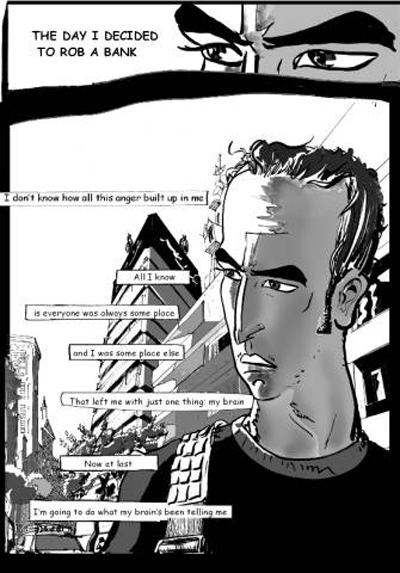
The first Egyptian graphic novel, The Metro, was confiscated by the authorities last week a few months after its publication, writes Rania Khallaf Magdy El-Shafie, author and cartoonist of The Metro, widely regarded as the first Egyptian graphic novel, last week received a summons to appear before the state prosecution service following the confiscation of his novel from the publisher, Malameh. Mohammed El-Sharqawy, head of Malameh, also received a summons, this time following 15 days spent in prison as a result of his participation in the 6 April strikes.
According to the state prosecution service, El-Shafie's graphic novel, his first, contains obscenity and libelous references alleging corruption on the part of prominent Egyptian political figures. The confiscation of the novel has caused some in Egypt's cultural community to recall previous such incidents, including when the novel A Banquet for Seaweed by Syrian novelist Haydar Haydar was confiscated on similar charges in 2000.
Labels:
Art,
books,
comics,
Culture,
Definite Art Stories,
Definite Stories,
Egypt,
law,
prison,
Stop Censoring Me,
Syria
On Death Row in China

Chibuzor Vitus Ezekwem was executed in China after a Chinese court found him guilty of trafficking in banned substances. 18 Nigerians are on death row China.
Malawi: To believe or not to believe rumors of a coup plot?

Following Victor Kaonga's Monday May 12th breaking news post of the unusual arrests in Malawi of high ranking former and current military and police officers, as well as opposition figures, amid government accusations of a coup plot, Malawian react to the news with shock, skepticism, bewilderment, and ambivalence.
The End of the World: CERN

CERN has announced that the Large Hadron Collider will switch on in May 2008, with collisions at full energy starting in summer 2008."We'll be starting up for physics in May 2008, as always foreseen, and will commission the machine to full energy in one go," said LHC project leader Lyn Evans. The €6.3bn Large Hadron Collider (LHC) will be the world's largest particle accelerator, colliding protons at energies of 14 TeV to generate what physicists hope will be a slew of new particles, such as the Higgs boson and so-called supersymmetric particles.The builders of the world's biggest particle collider are being sued in federal court over fears that the experiment might create globe-gobbling black holes or never-before-seen strains of matter that would destroy the planet.
Legalize it

In April of 2008, one of Brazil’s main ayahuasca centers submitted paperwork to Brazil’s Culture Minister, Gilberto Gil, requesting that the Instituto do Patrimônio Histórico e Artístico Nacional (National Institute of Historic and Artistic Heritage; IPHAN) recognize the use of ayahuasca in religious ceremonies as an element of Brazilian national cultural heritage.More significantly, the paperwork was filed with the full support of the government authorities of the Brazilian
state of Acre. Ayahuasca religious groups apparently hope that this registry will reinforce their as yet uncertain social legitimacy. If IPHAN approves the request, it would be a major victory for these groups whose practices, which have been historically marginalized and discriminated,might ultimately be enshrined as part of the country’s national heritage.
The registry also raises difficult questions, since preserving a cultural practice and traditional knowledge can mean fossilizing it as if it were a pure and timeless form, when in fact the religious and therapeutic practices that involve partaking of ayahuasca are dynamic, syncretic, and at times even contradictory. As Ayahuasca is a psychoactive substance used by diverse indigenous populations of the Amazon.
Monday, September 13, 2010
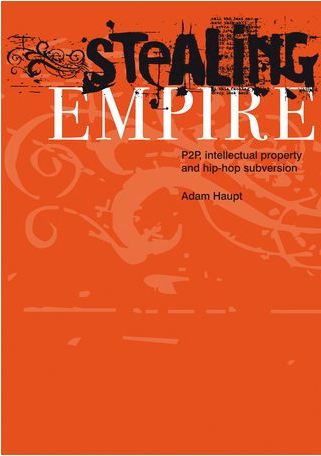
Stealing Empire: P2P, intellectual property and hip-hop subversion
Adam Haupt
Stealing Empire poses the question, "What possibilities for agency exist in the age of corporate globalisation?" Using the work of Antonio Negri and Michael Hardt as a point of entry, Adam Haupt delves into varied terrain to locate answers in this ground-breaking inquiry. He explores arguments about copyright via peer-to-peer (P2P) platforms such as Napster, free speech struggles, debates about access to information and open content licenses, and develops a politically incisive analysis of counterdiscourses produced by South African hip-hop artists. From ‘empire stealing’ through their commodification of countercultures to the ‘stealing empire’ activities of file-sharers, culture jammers and hip-hop activists, this book tells the story of people defining themselves as active, creative agents in a consumerist society.
Stealing Empire is vital reading for law, media and cultural studies scholars who want to make sense of the ways in which legal and communication strategies are employed to secure hegemony.
Go Open: click here to download the entire book for free
Labels:
books,
globalisation,
internet,
law,
music,
non-fiction,
South Africa
Subscribe to:
Posts (Atom)