Showing posts with label Ghana. Show all posts

Tuesday, November 16, 2010

The Spear (of the nation)


Published by Drum in Nigeria and later also Kenya and Ghana in the early 60s, African Film was just one of the many photo comics or "look books" that flooded English-speaking West Africa in the early post colonial era. Catering to the new urban youth, the series featured the mythical persona of Lance Spearman, a.k.a. "The Spear," a black James Bond-like crime fighter as the central character.
In contrast to the racist stereotype of the uncivilised, uneducated, spear-carrying cannibal, or the eroticised "noble savage" that characterised the depictions of Africans in most Western comic books from the time, Spearman was sharp, stylish and sophisticated. Combining re-appropriated Western references with a distinctly African cultural identity, he reflected a newly defined black Atlantic modernity. Here was a comic book hero that presented a potential critique of colonialism, as well as a significant variation in how the genre classically figured normality and otherness.

Since then The Spear and the comics that featured him have disappeared, but not from their fan's memory. As the comments on the Chimurenga Library website testify The Spear is one sought after individual:

"Looking up on the Chimurenga Library website, I came across so many nostalgic comments on the Boom and Film mags from those who lived in East Africa in the 60's and early 70's like myself, which brought back so many heart-wrenching memories of yester-years.... I certainly would give anything if I could get hold of that collection today... Where have the old dummy prints in the old publishing places that used to publish these mags gone? If those were found or maybe the kids or grand kids of the editor/s(who would be grown-ups now) could be traced, there may be a chance that these wonderfully entertaining photo comics-BOOM and FILM could be resurected. My God, how blessed myself and all of us would be to be able to re-live our childhoods-those glorious years again!"

More here.

We investigate the legacy and the grip of the infamous Spear on the imagination of a generation. It's also a treasure hunt: where is the Spear today and who has the lost stash of African Film magazines?

Tuesday, November 9, 2010

Not down in any map; true places never are


As for Melville in the 19th century, so it is now.

Blighted Joburg (town/inner-city) is on something of an upswing - in the popular imaginary at least. There's
Hotel Yeoville, a lyrical document of loves and lives in ex-bohemia; there 's Yeoville Studio at Wits, an architecture/urban-planning experiment that, among other things, has produced this guide to eating a whole continent without leaving town.

The Yeoville eating guide is a map of the future: it's a map of potential delight for those who dare. Meanwhile, what of those who are? Right here in Joburg, there are maps of Ethiopia, Senegal,
Côte d'Ivoire, Mozambique, Somalia, Zimbabwe, Pakistan, Bangladesh and more; maps of the present; carried and communicated and explained and rearranged every single day.

Wednesday, September 15, 2010

Breeding toxins from dead PCs


Reports on dumping of electronic waste in Nigeria and Ghana

The UN Environment Program has stated that Western countries produce around 50 million tons of digital waste every year. In Europe, only 25 percent of this type of waste is collected and effectively recycled. Much of the rest is piled in containers and shipped to developing countries, supposedly to reduce the digital divide, to create jobs and help people. In reality, the inhabitants of dumps like Agbogbloshie survive largely by burning the electronic devices to extract copper and other metals out of the plastic used in their manufacture. The electronic waste contaminates rivers and lagoons with consequences that are easily imaginable. In 2008 Green Peace took samples of the burnt soil in Agbogbloshie and found high concentrations of lead, mercury, thallium, hydrogen cyanide and PVC.

Tuesday, September 14, 2010

The state of correctional facilities in Ghana and plans to change the name of the Ghana Prisons Service

“The Prisons Service, like many other public institutions, has over the years suffered under the proverbial ‘No funds’ syndrome and those who know the system very well, will admit that there is very little correction in our prison system.


Overcrowding, poor sanitation and lack of learning and training facilities have made the prisons more of concentration camps than centres of reformation...

In Ghana, very few can claim that they came out of our prisons better equipped than when they went in. Some claim spiritual development, which only confirms the physical deprivations they went through while in prison custody…

These deprivations and the stigma associated with prison life have seriously contributed to the situation where most convicts come out from the prisons ready to exert revenge on society…

We know the problems of the Ghana Prisons Service… So why do we think by giving an old institution a new name, everything will change for the better overnight?”

http://blogs.thinkghana.com/2008/05/12/welcome-ghana-correctional-service/

A symposium on the technical aspects of the 2008 Africa Cup


A symposium on the technical aspects of the 2008 Africa Cup of Nations in Ghana was held in Cairo to evaluate what happened. The objective of the star-filled workshop was to review the 26th Africa Cup of Nations in Ghana and also identify key challenges in the pursuit of developing African football.

Published in Cairo by AL-AHRAM established in 1875 1 - 7 May 2008 Issue No. 895

Monday, September 13, 2010

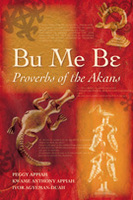
BU ME BE: Proverbs of the Akans


Appiah, Peggy

The most extensive bi-lingual Twi Proverbs Dictionary published since J.G. Christaller's book was first published in 1879. Kwame Anthony Appiah's introduction demonstrates how these proverbs can be interpreted within the tested and contested theories of meaning and literary production to show how they compare with philosophical musings from ancient Greece to England. An invaluable collection of over 7000 proverbs that speak to the nuances of Akan and Asante life, thought, belief and social organisation. British writer and painter Appiah (1921-2006) lived among the Asante and Akan people of Ghana for over 50 years, and wrote widely about them, mostly for children. She compiled this collection with the help of her son Kwame Anthony Appiah and Ivor Agyeman-Duah.

311pp, UK. AYEBIA.
2008 9780955507922 Hardback