This story is from 2009 but we could explore the lead-up
Medical Marijuana Inc. and others start pushing green on the stock exchange
April 28 (Bloomberg) -- The former Club Vivanet Inc. said it plans to use prepaid cards to manage tax collection and payment processes for marijuana dispensaries in states that allow the drug to be used for medicinal purposes, according to a release sent by Market Wire. The company, trading under the ticker MJNA, will also split its shares 10-for-1, the statement said.
States including Oregon and California allow residents to use marijuana for diseases ranging from cancer to epilepsy and glaucoma. More than 20,000 Oregon residents are registered to use the drug, based on statistics from the state’s Web site.
“This is a sizzle product,” Bruce Perlowin, Medical Marijuana’s chief executive officer, said in a telephone interview from El Paso, Texas. “We eventually want to be the McDonald’s of marijuana.”
Via Bloomberg
Showing posts with label drugs. Show all posts
Showing posts with label drugs. Show all posts
Tuesday, October 12, 2010


Monday, October 11, 2010
Stoners Against Proposition 19
"When most marijuana activists, growers and consumers first heard about an initiative that would legalize cannabis in California, they thought it was a pipe dream come true. To many, legalization implied that it would no longer be a crime to possess, consume or distribute marijuana. Cannabis consumers rejoiced at the idea of being able to buy from their neighbors or at parties—just as they already do—with no legal retribution. Small-time growers envisioned being free to sell their product to those who sought them out, with no legal repercussions. Marijuana activists thought it meant that people would stop getting arrested for pot, and that the drug war would finally be over. But now that the initiative is headed to ballot, many pro-legalization supporters are coming out against it. Why?
Simply put, the Regulate, Control and Tax Cannabis Initiative does not reflect most people’s ideas of what legalization would be. The media often incorrectly reports that this initiative calls for 'full legalization' of marijuana. It does not. In fact, it reverses many of the freedoms marijuana consumers currently enjoy, pushes growers out of the commercial market, paves the way for the corporatization of cannabis, and creates new prohibitions where there are none now. Apparently, to be pro-legalization and pro-prop 19 are two different things entirely...
I asked Richard Lee, principle investor in this initiative, directly about this in an interview:
"Let's say I get pulled over by a cop and I'm carrying an ounce. How will I be able to prove that it was 'lawfully obtained?'" I asked.
Lee's response: "You'll have to keep your receipt."
Not only is this inconvenient, but it sets the industry up to be monopolized. This prohibition also means that even if you are in possession of marijuana that was gifted to you - if it was purchased from anywhere other than a licensed dispensary, you will be illegally in possession of "unlawfully obtained" cannabis, and you will be subject to punishment under Prop. 19.
This is what "legalization" looks like?
And there are very few licensed dispensaries in California, by the way. In Oakland, there are four—-Richard Lee owns one of them—-and a cap has been placed in that city so that there can be no others. (Cha-ching!)"

Source
Rebranding Marijuana: How weed could save the economy, end Mexican drug wars, and heal the world


"We have believed for some time that Mexico should legalize marijuana and perhaps other drugs. But until now, most discussion of this possibility has foundered because our country's drug problem and the U.S. drug problem are so inextricably linked: What our country produces, Americans consume. As a result, the debate over legalization has inevitably gotten hung up over whether Mexico should wait until the United States is willing and able to do the same.
Proposition 19 changes this calculation. For Mexico, California is almost the whole enchilada: Our overall trade with the largest state of the union is huge, an immense number of Californians are of Mexican origin, and an enormous proportion of American visitors to Mexico come from California. Passage of Prop 19 would therefore flip the terms of the debate about drug policy: If California legalizes marijuana, will it be viable for our country to continue hunting down drug lords in Tijuana? Will Wild West-style shootouts to stop Mexican cannabis from crossing the border make any sense when, just over that border, the local 7-Eleven sells pot?"
Héctor Aguilar Camín and Jorge G. Castañeda, The Washington Post
The Economy:
While California struggles to address the state's swelling budget deficit, the legalization of marijuana looms as an attractive way of raising revenue for the state.
The benefits of legalization include:
* An excise tax of $50 per ounce of marijuana would raise about $770 - 900 million per year.
* Retail sales on the legal market would range from $3 - $4.5 billion, generating
another $240 - 360 million in sales taxes.
* Legalization would save over $200 million in law enforcement costs for arrest, prosecution, trial and imprisonment of marijuana offenders. Need for CAMP helicopter surveillance would also be eliminated.
* Based on experience with the cigarette tax, total revenues of $1.5 - $2.5 billion might ultiimately be realized.
* Industrial hemp could also become a major business, comparable to the $3.4 billion cotton industry in California.
Source
The World:
“Hemps prohibition has led to untold suffering around the globe. If we— the global human population — had been able to grow the miracle plant hemp (Cannabis genus) locally and to use it for local industries and businesses, including and especially for fuel, we would never have needed to be addicted to oil...
“None of this oil-related...degradation of the environment would have occurred if hemp had not been prohibited but had been used wisely and intelligently as a major foundation of human society. Indeed, hemp-based economies could still save the human world, while hemp planting could go a massively long way in rescuing the natural world as well.”
Source
Wednesday, September 15, 2010
Marijuana in Brazil

After a long period of dictatorship, and since the political liberalization of the 80's, Brazilians have learned to value freedom of expression as a key democratic right. But the last weeks have shown that some issues such as marijuana legalization still don't hold the status of being entitled to a legally sanctioned public debate. This year's edition of the Marijuana March was prohibited by courts in 9 capital cities across the country due to allegations of illegal promotion of drug use.
Cannabis was brought to Brazil by the first Africans arriving from Angola, and it's use and cultivation was encouraged by the Portuguese, which resulted in it being culturally assimilated by the mestizos and by some Indian groups. Medical use was also common, mostly during the second part of the 19th century, and even advertised in Brazilian medical journals up to the first years of the 20th century.
Viewed by many as an insult to the meaning of the ethnic and cultural use of this plant, which is part of the African cultural heritage. Recently, the Minister of Culture Gilberto Gil presented a proposal to register Ayahuasca, an psychoactive mix of plants that composes the Santo Daime and Hoasca tea, as a National Cultural Heritage. If the ‘small death‘ can, why not the ‘Manga Rosa', the ‘Cabeça de Nego' and the ‘Cabrobó' [popular types of Brazilian marijuana]?...
Tuesday, September 14, 2010
On Death Row in China

Chibuzor Vitus Ezekwem was executed in China after a Chinese court found him guilty of trafficking in banned substances. 18 Nigerians are on death row China.
Mexican norteño musicians murders
In the last several years, at least one dozen Mexican norteño musicians have been murdered in a wave of violence bearing the brazenness and brutality of Mexico’s drug cartels. Most of the victims performed what are known as “narcocorridos,” popular folk songs that tell the stories of the Mexican drug trade — and, depending on who you ask, celebrate its leaders as folk heroes.
For years, the cartels encouraged these types of songs; in fact, many traffickers commissioned well-known musicians to write about their exploits. But now, in the midst of a government offensive against the traffickers and brutal infighting among the cartels, some corrido musicians have found themselves in the middle of the violence. The murders are just one reflection of how Northern Mexico's complicated relationship with the drug trade is changing.
For years, the cartels encouraged these types of songs; in fact, many traffickers commissioned well-known musicians to write about their exploits. But now, in the midst of a government offensive against the traffickers and brutal infighting among the cartels, some corrido musicians have found themselves in the middle of the violence. The murders are just one reflection of how Northern Mexico's complicated relationship with the drug trade is changing.
Mexican cop killings

Esteban Robles Espinosa (died May 9, 2008) was the commander of Mexico City's Investigative Police Force. He headed Mexico City's anti-kidnapping unit until 2003 and served on the internal affairs commission. He was fatally shot down on 9 May 2008 around dawn by armed men, a day after the death of Federal Police chief dgar Eusebio Millán Gómez, probably in retaliation for the recent crackdown on organized crime. eferences 2 top Mexican police officials killed" (http://www.cnn.com/2008/WORLD /americas/05/09/mexico.violence/index.html) . CNN. 2008-05-09.
http://www.cnn.com/2008/WORLD/americas/05/09/mexico.violence
/index.html. Retrieved 2008-05-10.
Édgar Eusebio Millán Gómez (1967 – 8 May 2008) was a
third-ranking member of Mexico's Secretariat of Public
Security and acting commissioner of the Federal Preventive
Police. Born in Mexico City, he received a law degree from
the Universidad del Valle de México. After graduating he
started his career in the Mexican Federal Police and received
training in several countries. He was notable for his loyalty to
the rule of law and lead many strikes to the Mexican drug
cartels at the height of the Mexican Drug War.
Legalize it
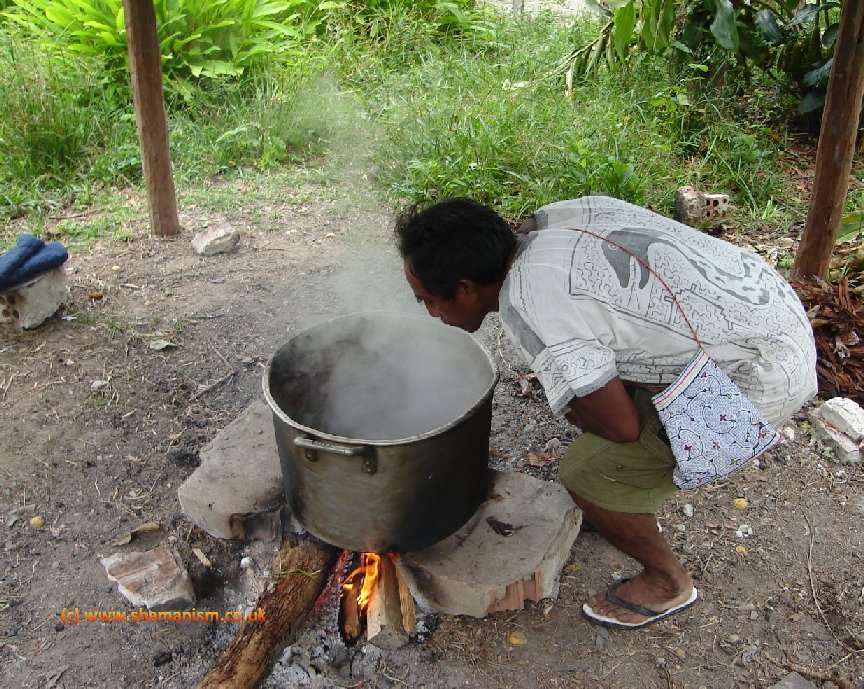
In April of 2008, one of Brazil’s main ayahuasca centers submitted paperwork to Brazil’s Culture Minister, Gilberto Gil, requesting that the Instituto do Patrimônio Histórico e Artístico Nacional (National Institute of Historic and Artistic Heritage; IPHAN) recognize the use of ayahuasca in religious ceremonies as an element of Brazilian national cultural heritage.More significantly, the paperwork was filed with the full support of the government authorities of the Brazilian
state of Acre. Ayahuasca religious groups apparently hope that this registry will reinforce their as yet uncertain social legitimacy. If IPHAN approves the request, it would be a major victory for these groups whose practices, which have been historically marginalized and discriminated,might ultimately be enshrined as part of the country’s national heritage.
The registry also raises difficult questions, since preserving a cultural practice and traditional knowledge can mean fossilizing it as if it were a pure and timeless form, when in fact the religious and therapeutic practices that involve partaking of ayahuasca are dynamic, syncretic, and at times even contradictory. As Ayahuasca is a psychoactive substance used by diverse indigenous populations of the Amazon.
Subscribe to:
Posts (Atom)