Showing posts with label books. Show all posts

Tuesday, November 16, 2010

The Spear (of the nation)


Published by Drum in Nigeria and later also Kenya and Ghana in the early 60s, African Film was just one of the many photo comics or "look books" that flooded English-speaking West Africa in the early post colonial era. Catering to the new urban youth, the series featured the mythical persona of Lance Spearman, a.k.a. "The Spear," a black James Bond-like crime fighter as the central character.
In contrast to the racist stereotype of the uncivilised, uneducated, spear-carrying cannibal, or the eroticised "noble savage" that characterised the depictions of Africans in most Western comic books from the time, Spearman was sharp, stylish and sophisticated. Combining re-appropriated Western references with a distinctly African cultural identity, he reflected a newly defined black Atlantic modernity. Here was a comic book hero that presented a potential critique of colonialism, as well as a significant variation in how the genre classically figured normality and otherness.

Since then The Spear and the comics that featured him have disappeared, but not from their fan's memory. As the comments on the Chimurenga Library website testify The Spear is one sought after individual:

"Looking up on the Chimurenga Library website, I came across so many nostalgic comments on the Boom and Film mags from those who lived in East Africa in the 60's and early 70's like myself, which brought back so many heart-wrenching memories of yester-years.... I certainly would give anything if I could get hold of that collection today... Where have the old dummy prints in the old publishing places that used to publish these mags gone? If those were found or maybe the kids or grand kids of the editor/s(who would be grown-ups now) could be traced, there may be a chance that these wonderfully entertaining photo comics-BOOM and FILM could be resurected. My God, how blessed myself and all of us would be to be able to re-live our childhoods-those glorious years again!"

More here.

We investigate the legacy and the grip of the infamous Spear on the imagination of a generation. It's also a treasure hunt: where is the Spear today and who has the lost stash of African Film magazines?

Friday, November 12, 2010

Dany Laferrière Interview


Still life bathed in warm light: a porcelain bathtub with claw feet, sumptuous white towels draped over the edge, a table set with a stack of books and a glass of red wine. A Monday night in May, and 400 people fill the darkness of Montreal’s Place des Arts’ Cinquième Salle, waiting for Dany Laferrière. He seems to glide onstage, slim, tall, impeccably dressed in a dark suit and a white shirt open at the neck — a gentleman writer or, as the French are saying, un grand écrivain.

Instant applause. They know him well, maybe too well. How as a penniless refugee from Haiti, he chucked his menial job to write a novel about a penniless Haitian refugee writing a novel about himself. A mythical summer in a sweltering apartment on rue St-Denis, drinking, womanizing, reading, writing about the meaning of it all, sure it would lift him out of poverty and obscurity. He took the manuscript first to Jacques Lanctôt, the former FLQ activist turned publisher, warning him to expect a bomb. And he was right.

To the monoculture of Quebec, caught up in the sovereignty debate, Comment faire l’amour avec un Nègre sans se fatiguer offered an exhilarating mix of provocation and humour. Politics, too, but nothing to do with local obsessions. “In the scope of Western values,” the narrator announced, “white woman is inferior to white man, but superior to black man. That’s why she can’t get off except with a Negro. It’s obvious why: she can go as far as she wants with him. The only true sexual relation is between unequals.”

Published in 1985, it was an instant bestseller in Quebec. The translation by David Homel, How to Make Love to a Negro, came out a year later, drawing delirious reviews across Canada as well as in the UK and the US. And, as in the novel, life obeyed art. The author was invited on Denise Bombardier’s popular Radio-Canada TV show, leading to an avalanche of publicity, which he parlayed into a media career spanning the gamut from TV weatherman (a job he famously once performed naked) to talk show regular, literary columnist, and filmmaker. His second book, éroshima, found the author reading the Japanese poet Basho and enjoying sex with Japanese girls. A new book followed every year or so, always first person, in the same pithy style and often very funny — a chronicle of the life and times of a narrator everybody figured must be Dany Laferrière.

Excerpt from 'The Work of Art' by Marianne Ackerman. First appeared in Sept. 2010 issue of The Walrus.

Wednesday, November 10, 2010

Okwui Enwezor's Archive Fever

Archive Fever: Uses of the Document in Contemporary Art
International Center of Photography
New York, New York
January 18 - May 4, 2008

Enwezor: "…I want to make a distinction between curating within the canon and curating within culture."

Archive fever : uses of the document in contemporary art /
Okwui Enwezor [curator].
Gottingen : Steidl ; London : Thames & Hudson
May, 2008.
ISBN: 9783865216229 (pbk.)

Organized and written by renowned scholar and ICP Adjunct Curator Okwui Enwezor, Archive Fever presents works by leading contemporary artists who use archival documents to rethink the meaning of identity, history, memory, and loss. Over the past thirty years, successive generations have taken wide-ranging approaches to the photographic and filmic archive. The works presented here take many forms, including physical archives arranged by peculiar
cataloguing methods, imagined biographies of fictitious persons, collections of found and anonymous photographs, film versions of photographic albums, and photomontages composed of historical photographs. These images have a wide-ranging subject matter yet are linked by the artists shared meditation on photography and film as the quintessential media of the archive. Artists in the exhibition include Tacita Dean, Stan Douglas, Felix Gonzalez-Torres, Zoe Leonard, Ilán Lieberman, Walid Raad, Thomas Ruff, Anri Sala, Fazal Sheikh, Eyal Sivan, Lorna Simpson, and Vivan Sundaram, among others.

Monday, November 1, 2010

Radical Essays on Nigerian Literatures

Edited by
G.G. Darah
This anthology of essays brings together original critical
comments on Nigerian literatures written in the 1970s and
1980s. It is a celebration of Nigeria's contribution to the
world's heritage of letters. The twenty-three essays explore
the fundamental role of the intelligentsia in defining and
describing the nation state in space and time. The
contributions represent some of the best and most articulate
assessments of Nigeria's literary discourses in their
pre-colonial and colonial phases. The various ideological
reflections in the essays reveal significant details about the
intellectual and imaginative processes that have gone into
the shaping of Nigeria over the centuries. The diversity of
themes examined, the historical epochs covered and the
geo-political spread of the contributors add to the uniqueness
of the volume. Chinua Achebe, J.P. Clarke, Femi Osofisan
and Kole Omotoso are among the 23 contributors included.

Published by Malthouse Press, Nigeria
North American Distribution
392 pp., 6.00" x 9.00", January 2008
Paper, $34.95,
9780232540
9789780232542

Preface here

Sunday, October 17, 2010

Fuck Granta… thanks, Granta


"If I was smart, I would have waited a few years and made an iPhone app: a little satirical story about how to write about Africa every day, interactive and adaptable, for ninety-nine cents. Fuck Granta… thanks, Granta." Binyavanga Wainaina

In 1962, as many African countries were gaining independence, Heinemann’s African Writer’s Series introduced some of Africa’s most important writers to the continent, and to the world. At the time, the idea of a series spanning the continent seemed reasonable: many countries were encountering the same phenomenon, at the same time.

Almost 50 years later, the media revolution combined with the ongoing flow of immigration has opened up a chapter in African writing. A new generation of African writers has arrived Over the past six years, partly through the efforts of publishing and literary networking through institutions like Kwani (www.kwani.org), Farafina (www.kachifo.com) and Chimurenga (www.chimurenga.co.za). In 2005 Granta published The View from Africa, featuring "fresh voices from Africa, in all their differences". In the same year Bard College created the Chinua Achebe Center for African Writers and Artists, "a world class institution that serves a new generation of African writers". The Orange Prize for Fiction was awarded in London 2007 to Chimamanda Ngozie Adichie's Half of a Yellow Sun, and the Caine Prize for African Writing has introduced new writers to agents and publishers. Writers like Chimamanda Adichie, Alain Mabanckou, Chris Abani, Petina Gapah, Marie Ndiaye and Seffi Ata are known and read in many African countries, in the African diaspora, and in Europe and America.

Soros Explains The Credit Crisis


The New Paradigm for Financial Markets: The Credit Crisis of 2008 And What It Means by George Soros ($23, Public Affairs, 2008).

[George Soros is the Founder and Chairman Open Society Institute. See biography here]

With his near real-time critique of the credit crisis, George Soros has saved financial historians a lot of work. If he's right, the summer of 2007 and all of 2008 will be the topic of many an academic paper, much like how Ben Bernanke made a career out of studying the Great Depression. Soros sees this as a monumental time. It's not just a bursting housing bubble, he says. It's the end of a quarter-century of credit-driven economic expansion. We're in a whole new world.

Up until August 2007, Soros had mostly farmed out management of his hedge fund to outsiders so that he could devote his time to philanthropy, philosophy and politics. The first troubles in subprime spurred Soros back into the markets. This time his goal wasn't so much to find the next billion-dollar trade but to preserve the wealth of his foundations.

This market has been so tough that it's vexed even Soros. His book offers a broad trading diary from January 2008 through the end of March, when The New Paradigm went to the printer. Soros' investment plan was to "short U.S. and European stocks, U.S. 10-year government bonds and the U.S. dollar; long Chinese, Indian and Gulf States stocks and non-U.S. currencies."

On March 10, he noted that commodities were stronger than he thought they'd be, that the Federal Reserve acted more aggressively than he'd anticipated and that the Indian and Chinese stock markets, not quite decoupled from the U.S. economy, took major hits. On March 16, he observed that "The panic is palpable," and bought into ailing Bear Stearns (nyse: BSC - news - people ), expecting some return on a Federal Reserve brokered auction of the company. He got burned admitting that, "We forgot to take into account that Bear is disliked by the establishment, and the Fed would use the occasion to deal with a moral hazard by punishing shareholders."

For those who might be confused by Soros' analysis there, Bill Miller, manager of the Legg Mason Value Trust explains: "Bear had been very aggressive in seizing the capital of Askin Capital in 1994 and precipitating its failure. In 1998 it opted out of rescuing Long Term Capital Management. That's the kind of thing where, if you're Merrill, Citigroup or the Fed, you remember." Miller also bought shares in Bear, for the same reasons Soros did.

The trading diary ends with Soros losing money. While he wishes he could have reached a more triumphant ending, he notes that the result "may be more appropriate for the purposes of the book."

Indeed, it is. While Soros is investing actively again, he's really using the market as a laboratory where he can test his philosophical ideas, especially the notion of reflexivity--that no market participant can ever have perfect knowledge because their beliefs, and the beliefs of others, effect and distort the markets. Because investors tend to herd--they buy things that are going up and sell things that are going down--markets are constantly beset by bubbles. Irrationality reigns supreme.

Soros was once a student of the philosopher Karl Popper, who spent most of his time studying science. Popper came to the conclusion that all scientific statements must be falsifiable and that no scientific theory is ever absolutely true. They are just able to withstand people's attempts to prove them wrong. So long as a theory isn't falsified, it's as good as true. But we're 100% certain about nothing.

The turmoils we see in the markets reflect the turmoils of human thought. The implications of this go far beyond investing. It means that market fundamentalism, the idea that markets are always self-correcting and don't need regulation, is just wrong. Markets are flawed because they reflect human delusions of certainty. Banks make money by issuing loans. If they want to make more money, they need to issue more loans. Absent regulation to stop them, the banks will issue new loans in new ways. They rationalize the risk away by building models based on past experience. The risk models say that the loans are safe. The flaw? All of these new loans fuel an unprecedented housing bubble that the risk models, which are backward looking, can't account for. All of these new loans also create new levels of debt, also unprecedented in history. So the risk models, once again, miss them.

It's time, says Soros, to bring back some of the regulations that were put in place after the Great Depression and then eroded in the decades that followed. Leverage and credit creation, he says, need to be reigned in. Regulators need to start looking to control asset bubbles as they manage the economy for the more usual goals of full employment and price stability.

Soros sees a new economy, indeed a new world order emerging. If the U.S. leaves its fate to the whims of flawed markets, it will lose much of its worldwide influence. Without the dollar as the reserve currency of first choice, the U.S. really has nothing but military supremacy in order to defend its position in the world, and even that, says Soros, has been undermined by the debacle in Iraq.

Soros' message for citizens, investors, politicians and regulators is to approach this new economy and new political order with humility. Be flexible and never dogmatic. Strive to find truth while realizing it's unattainable. It's false certainty that trips us up, in both investing and life.

First published here.

Literary Agents

In a recent article Mukoma wa Ngugi (author of Nairobi Heat) spoke about a lack of serious literary agents and publishers in Africa. "A good number of us are working with Western literary agents who are familiar mostly with Western publishers. This in turn means that they are likely to represent books that will be assured a Western audience. This means that there are good books that have Africans as their primary audience that are not being published. But in the absence of viable publishing in most African countries, even African literary agents would have a problem."

Who are the literary agents currently working with writers on the continent? What do they looking for? How are they shaping writing in Africa?

Monday, October 11, 2010

Literary Betting: Words from a Bookies Booker

 Lit prizes as sport 

"Snubbed again - I can't understand why I have been overlooked. The judges for the Booker Prize have been announced and, yet again, I am not on the list. Don't they know I have credentials second to none entitling me to be added to this prestigious gathering? Haven't I been betting on it for the best part of twenty years? Aren't I invariably the only person outside of the actual judges at the Guildhall each year to have read all of the books and not just skimmed through the fly-leaves to pick up a feel for the book? Aren't I interviewed by whichever TV station happens to be covering the event this year and asked for my tip every year? Don't the papers clamour for my opinion?

Of course I am - of course they do - yet that elusive invitation remains just a dream. I am treated as though I were a judge, though. One national newspaper reviewer rang me a few weeks back asking me to quote odds for his hot tip to win the Booker Prize this year. I told him that was like telling me Red Rum was in the Grand National but not telling me who he was running against. I did take the precaution of getting hold of the book he fancied and reading it. The book is a decent enough read and packs in plenty of references to the seventies, although many of them seem to be inserted just to prove how well the author's done his research. Should get nominated but is probably too readable to win!

See, I can be controversial - which is always a good trait for a Booker judge - the Award doesn't really warm up each year until someone comes out with some outrageous comment which gets plenty of publicity and stimulates the betting market. Because, of course, the majority of people who bet on the Award do so not because they have read all the books, but because they are following a reviewer's hint or someone told them that they read one of the books and it was unputdownable - or, in some cases, incomprehensible."


Ladbroke (taking bets on the Nobel Prize, Man Booker, and others since 1987)
William Hill

Get someone to give odds on the '08 Caine Prize or one of the other African lit prizes

Wednesday, September 15, 2010

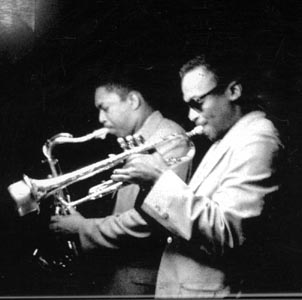
Clawing at the Limits of Cool: Miles Davis, John Coltrane, and the Greatest Jazz Collaboration Ever


Clawing at the Limits of Cool: Miles Davis, John Coltrane and the Greatest Jazz Collaboration Ever is an in-depth exploration of the music made by two jazz icons, trumpeter Davis and saxophonist Coltrane: the recordings they made both together and separately and the ways each man influenced the other and the world.

Farah Jasmine Griffin and Salim Washington
Hardcover; 304 pages
ISBN: 0312327854
Thomas Dunne Books
2008

China in Africa


Books:

AFRICA IN CHINA'S GLOBAL STRATEGY
Kitissou, Marcel (Ed.)
ADONIS & ABBEY.
2007 9781905068883 Paperback

AFRICAN PERSPECTIVES ON CHINA IN AFRICA
Manji, Firoze & Marks, Stephen (Eds.)
FAHAMU & SOLIDARITY FOR WOMEN'S RIGHTS.
2007 9780954563738 Paperback

AFRICA'S SILK ROAD: China and India's New Economic Frontier
Broadman, Harry G.
WORLD BANK PUBLICATIONS.
2006 9780821368350 Paperback

CHINA, AFRICA AND SOUTH AFRICA: South-South co-operation in a global era

le Pere, Garth & Shelton, Garth
SOUTH AFRICA. INSTITUTE FOR GLOBAL DIALOGUE.
2007 9781920216009 Paperback

CHINA IN AFRICA

Waldron, Arthur (Ed.)
USA. THE JAMESTOWN FOUNDATION.
2008 9780981690506 Paperback

CHINA IN AFRICA

Melber, Henning (Ed.)
SWEDEN. NORDIC AFRICA INSTITUTE.
2007 9789171065896 Pamphlet
CHINA IN AFRICA

CHINA AND AFRICA: Engagement and Compromise
Taylor, Ian
UK. ROUTLEDGE.
2006 9780415397407 Hardback

CHINA IN AFRICA: Mercantilist predator, or partner in development?

le Pere, Garth (Ed.)
SOUTH AFRICA. INSTITUTE FOR GLOBAL DIALOGUE.
2007 9781919697963 Paperback LIMITED AVAILABILITY

CHINA IN AFRICA: Partner, Competitor or Hegemon?
Alden, Chris
ZED BOOKS.
2007 9781842778647 Paperback

CHINA INTO AFRICA: Trade, Aid, and Influence

Rotberg, Robert I. (Ed.)
USA. BROOKINGS.
2008 9780815775614 Paperback

CHINA RETURNS TO AFRICA: A Rising Power and a Continent Embrace
Alden, Chris, Large, D. & De Oliveira, Ricardo Soares (Eds.)
UK. HURST.
2008 9781850658863 Paperback

CHINA'S NEW ROLE IN AFRICA AND THE SOUTH: A search for a new perspective

Guerrero, Dorothy-Grace & Manji, Firoze (Eds.)
UK. FAHAMU.
2008 9781906387266 Paperback

CROUCHING TIGER, HIDDEN DRAGON? Africa and China

Naidu, Sanusha & Ampiah, Kweku (Eds.)
SOUTH AFRICA. UNIVERSITY OF KWAZULU-NATAL PRESS.
2008 9781869141509 Paperback

ENTER THE DRAGON: Towards a Free Trade Agreement Between China and the Southern African Customs Union

Draper, Peter & le Pere, Garth (Eds.)
SOUTH AFRICAN INSTITUTE OF INTERNATIONAL AFFAIRS.
2005 1919697802 Paperback

THE NEW SINOSPHERE: China in Africa

Wild, Leni & Mepham, David (Eds.)
UK. IPPR.
2006 1860303021 Paperback

TOWARDS CHINA INC? Assessing the Implications for Africa
Mills, Greg & Skidmore, Natasha (Eds.)
SOUTH AFRICAN INSTITUTE OF INTERNATIONAL AFFAIRS.
2004 1919969268 Paperback

Tuesday, September 14, 2010

The Metro we missed


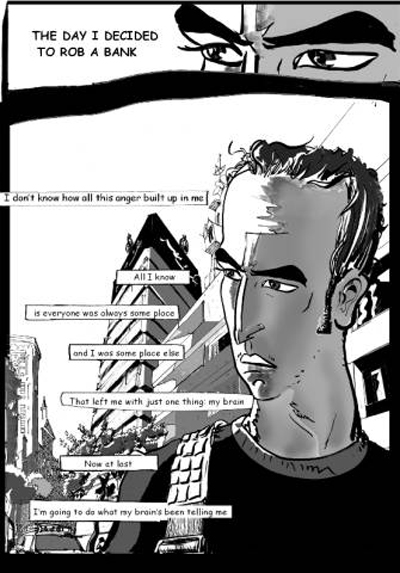
The first Egyptian graphic novel, The Metro, was confiscated by the authorities last week a few months after its publication, writes Rania Khallaf Magdy El-Shafie, author and cartoonist of The Metro, widely regarded as the first Egyptian graphic novel, last week received a summons to appear before the state prosecution service following the confiscation of his novel from the publisher, Malameh. Mohammed El-Sharqawy, head of Malameh, also received a summons, this time following 15 days spent in prison as a result of his participation in the 6 April strikes.

According to the state prosecution service, El-Shafie's graphic novel, his first, contains obscenity and libelous references alleging corruption on the part of prominent Egyptian political figures. The confiscation of the novel has caused some in Egypt's cultural community to recall previous such incidents, including when the novel A Banquet for Seaweed by Syrian novelist Haydar Haydar was confiscated on similar charges in 2000.

April 10th edition of the New York Times: editorial entitled The World Food Crisis


Critical look at world bank’s genetically-engineered Green Revolution as “a political strategy designed to gain and keep control over the Global South’s food systems firmly in the hands of northern corporations and institutions.”

*Raj Patel is the author of "Stuffed and Starved: The Hidden Battle for the World
Food System" and Eric Holt-Gimenez is the Executive Director of Food First (www.foodfirst.org).

*Henry Saragih is the International Coordinator for La Via Campesina.

Food security

Cameroon Publishing Boom


Popular fiction publishing in Cameroon

History

Editions CLE - Mongo Beti / Ferdinand Oyondo elite audience

Editions le Flambeau in the 70s publishing popular lit

Langaa Research and Publishing Common Initiative Group (Langaa RPCIG) www.langaa-rpcig.ne

Anglophone vs Francophone lit
see: http://anglocamlit.blogspot.com/
and HALF A CENTURY OF WRITTEN ANGLOPHONE CAMEROON LITERATURE

READING MBEKI’S LETTERS

At the end of April 2008, the then South African President Thabo Mbeki sent a letter to US president Bush vehemently critiquing his stance on Zimbabwe (the story story broke and caused a furor in the press in May 2008).

Often described as aloof, stoic, inaccessible in person, Mbeki was most comfortable and outspoken on the page. A prolific letter writer, he his weekly Friday missive to the nation frequently combined political commentary with academic analysis, passages of internal monologue, literary gestures and wry political ploys.

Reading Mbeki’s letters: we read Mbeki’s weekly “letter to the Nation” as a historical archive, political treatise, an autobiography and an epic epistolary novel, a fragmented book that offers rare insights into a man, a country, a continent.

The online archive of his letters spans the almost 10 years of his Presidency, from 2003 to 2007.

PEN World Voices

May 1 | Writing Place, Finding Refuge

When: Thursday, May 1
Where: Brooklyn Public Library: Grand Army Plaza, Brooklyn
What time: 7 p.m.
With Fatou Diome, Nuruddin Farah, Xiaolu Guo, and Etgar Keret; moderated by Rick Moody


Best-selling novelist Rick Moody will guide the discussion among Fatou Diome, Nuruddin Farah, Xioalu Guo, and Etgar Keret about the settings for their novels and short stories, the places they call home, and where they find refuge; introduced by BOMB's Betsy Sussler.

The Secret Lives of Cities

May 1, 2008 I Instituto Cervantes I New York City

With Yousef Al-Mohaimeed, Juan de Recacoechea, Joshua Furst, and Francisco Goldman; moderated by Matt Weiland

• Juan de Recacoechea reads from American Visa
• Joshua Furst reads from The Sabotage Cafe
• Francisco Goldman reads from The Long Night of White Chickens

Explore the underbellies of four very different cities: novelists Juan de Recacoechea, Yousef Al-Mohaimeed, Francisco Goldman, and Joshua Furst guide us through the alleyways and crime scenes of La Paz, Guatemala City, Riyadh, and Minneapolis.


May 1, 2008 | Joe's Pub | NYC

With György Dragomán, Hasan Elahi, Asli Erdogan, Péter Esterházy, Chenjerai Hove, Irakli Kakabadze, Jenny Marketou, Ivy Meeropol, Francine Prose, and Ingo Schulze

Cosponsored by the American Civil Liberties Union

May 1 | TimesTalk: American Literature Seen From Abroad
When: Thursday, May 1
Where: TheTimesCenter: 242 West 41st St.
What time: 6:30 p.m.

With Yousef Al-Mohaimeed, Ian McEwan, and Binyavanga Wainaina
Award-winning author Ian McEwan (Atonement, On Chesil Beach) and best-selling international authors Yousef Al-Mohaimeed from Lebanon and Binyavanga Wainaina from Kenya discuss the literature that defines the United States.

Per Ankh Publishers


Ayesha Harruna Attah was born in Accra, Ghana. With a fellowship from Per Ankh Publishers (2007 - April 2008) and TrustAfrica, she wrote her first novel, Harmattan Rain, which was shortlisted for the 2010 Commonwealth Writers' Prize, Africa Region. She was educated at Mount Holyoke College and Columbia University and is currently pursuing her creative writing MFA at NYU.

Mildred Kiconco Barya (1976- ), born Owemigisha Patricia on 1 August 1976, is a writer and poet from Uganda. She was awarded the 2008 Pan African Literary Forum Prize for Africana Fiction, but remains best known for her poetry, particularly her first two collections, Men Love Chocolates But They Don't Say (2002), and The Price of Memory: After the Tsunami (2006).

Barya has also worked as journalist and travel writer, and currently (as of August 2007 until August 2009) serves as Writer-In-Residence at TrustAfrica, a Pan-African foundation based in Dakar, Senegal. Barya also currently resides in Senegal, although she has previously lived and worked in Germany, Botswana, Kenya and Uganda. Besides her career as a writer, Barya has also worked as a Human Resource Advisor for Ernst & Young in Uganda.

[One of the Per Sesh Writing Program residents?]

Reflection / history of Per Ankh

Significance of choosing to publish in Africa (Bibi on relationship African / international publishers)

Five Years of My Life: An Innocent Man in Guantanamo


Murat Kurnaz

In October 2001, nineteen-year-old Murat Kurnaz traveled to Pakistan to visit a madrassa. During a security check a few weeks after his arrival, he was arrested without explanation and for a bounty of $3,000, the Pakistani police sold him to U.S. forces. He was first taken to Kandahar, Afghanistan, where he was severely mistreated, and then two months later he was flown to Guantanamo as Prisoner #61. For more than 1,600 days, he was tortured and lived through hell. Finally, in August 2006, Kurnaz was released, with acknowledgment of his innocence. Told with lucidity, accuracy, and wisdom, Kurnaz's story is both sobering and poignant--an important testimony about our turbulent times when innocent people get caught in the crossfire of the war on terrorism.

Publisher: Palgrave Macmillan (April 1, 2008)
ISBN-10: 0230603742 # ISBN-13: 978-0230603745

The World Is What It Is: The Authorized Biography of V.S. Naipaul


Patrick French

The biggest surprise in Patrick French's colourful biography of Sir Vidia Naipaul is that its biographee should have allowed it to be published. For it exposes him as an egotist, a domestic tyrant and a sadist to a degree that would be farcical if it were not for the consequent distress suffered over many years by his first wife, Pat.

Hardcover: 400 pages
Publisher: Picador; illustrated edition edition (31 Mar 2008)
Language English
ISBN-10: 0330433504
ISBN-13: 978-0330433501

The Hangman’s Game


Karen King-Aribisala is an exceptional talent. She won the Commonwealth Prize (African Region) for the Best First Book in 1990 for Our Wife and Other Stories, and the 2008 Commonwealth Prize (Africa region) for the Best Book for The Hangman’s Game an affecting novel, which observes parallels in the slavery imposed by General Sani Abacha’s military regime in the 1980s and the conditions that led to the Demarara slave revolt in 1823. When a young Guyanese woman sets out to write a historical novel based on the Demerara Slave Rebellion of 1823, she is beset by questions about her own African roots. To free her writer's block, she travels to Nigeria to experience her origins first-hand, and she soon finds herself brutally plunged into a world where the distinctions between her life and her fiction are blurred. Rich in tension, dark humor, and striking characters, this densely layered work offers an unparalleled look into the complex history of past and present Guyana, as well as the nature of postcolonial power in both Africa and the Caribbean. “In the book, Nigerians are as enslaved as are the blacks in Demarara. There is a connection between the hanging of the narrator’s friend (a Ken Saro-Wiwa-like figure) by Sani Abacha and the hanging of the missionary, John Smith, who went to Demarara. “Also, Jesus was hung on the cross.” said King. - Maureen Isaacson

Common Wealth Prize


12 to 18 May 2008 as part of the Franschhoek Literary Festival.

Africa

The Hangman's Game – Karen King-Aribisala (Nigeria)
Peepal Tree Press

Imagine this – Sade Adeniran (Nigeria), SW Books

Canada and the Caribbean

The Book of Negroes – Lawrence Hill (Canada), HarperCollins Publishers

The End of the Alphabet – C.S.Richardson (Canada), Doubleday

Europe and South Asia
Animal's People – Indra Sinha (India), Simon and Schuster

A Golden Age – Tahmima Anam (Bangladesh), John Murray

South East Asia and South Pacific
The Time We Have Taken – Steven Carroll (Australia), HarperCollins

The Anatomy of Wings – Karen Foxlee (Australia), University of Queensland Press

Overall winners


* Best Book: The Book of Negroes by Lawrence Hill (Canada)

* Best First Book: A Golden Age by Tahmima Anam (Bangladesh)